

How To Handle Common Landlord Challenges In The GTA
The information contained in this article should not be taken as legal advice.
For any matters related to landlord-tenant issues, we recommend you speak to a licensed paralegal and consult both the Residential Tenancies Act and the Landlord and Tenant Board website.
You can also refer to the official Residential Tenancy Agreement (Standard Form of Lease).
Being a landlord in the Greater Toronto Area (GTA) can be rewarding, but it also comes with many challenges, some of which are not obvious and can become quite costly.
Ontario’s rental market is heavily regulated by the Residential Tenancies Act, 2006 (RTA) and overseen by the Landlord and Tenant Board (LTB).
In this article, we’re going to cover some common issues landlords face, explain why they happen, talk about the consequences for landlords, and show how to resolve each problem legally.
We’ll provide official sources to ensure accuracy and reliability in our advice. The audience for this guide is landlords or potential rental property investors in Ontario (GTA), so the focus is on Ontario laws and processes.
Non-Payment Of Rent By Tenants
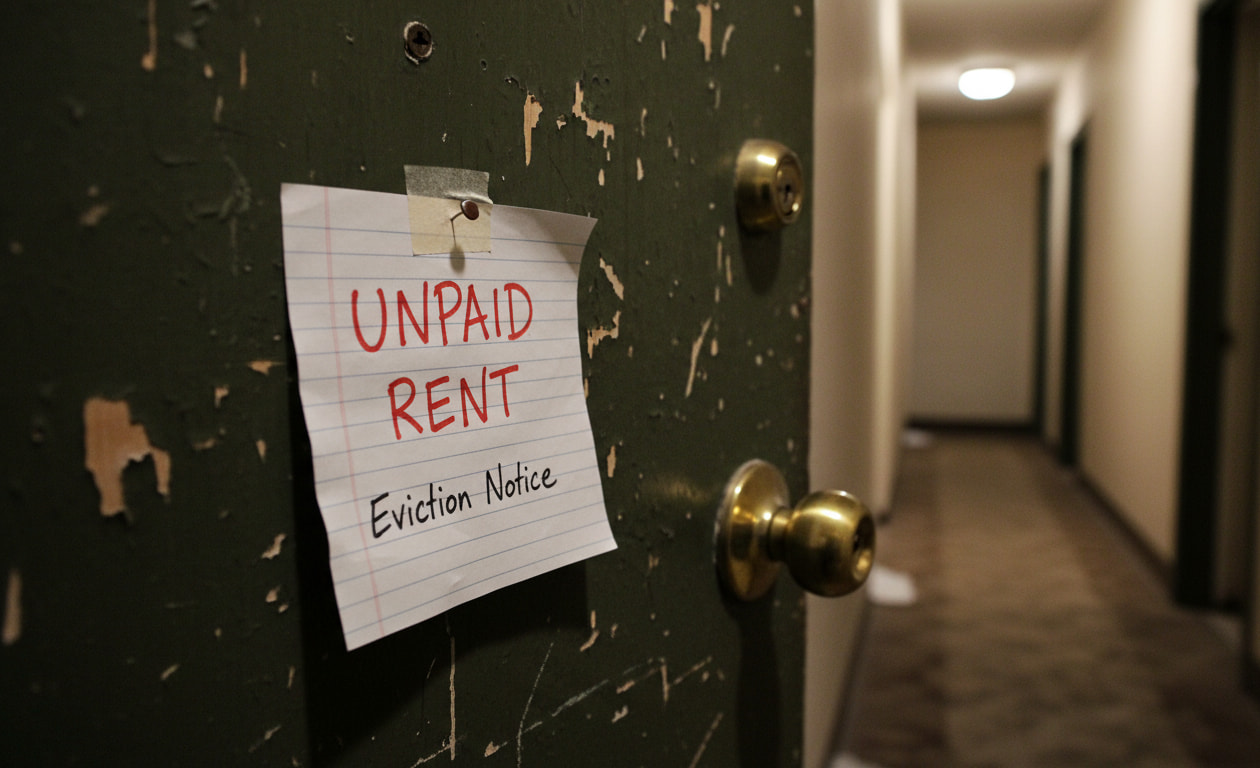
One of the most common issues we see as a real estate team is when a tenant fails to pay rent on time (or sometimes doesn’t pay at all).
This can happen for a number of reasons. For example, the tenant might be experiencing money problems (job loss or unexpected expenses), or sometimes a tenant might be abusing the system by withholding rent on purpose.
Regardless of the reason, non-payment of rent is a serious problem for landlords, as rental income is usually needed to cover mortgages, property taxes, and maintenance costs.
The landlord will have to go through a legal process to collect the owed rent or evict the tenant if non-payment continues. In Ontario, a landlord cannot simply change the locks or evict a tenant without an LTB order, even if rent is not paid. Doing this would be considered an illegal eviction and could lead to big fines (up to $50,000 for an individual landlord)
It’s important that landlords follow the proper procedure, and unfortunately, this can take a long time. During this period, arrears may accumulate, and the landlord might never fully recover the lost rent (even after eviction, collecting money can be difficult if the tenant has limited assets).
Where To Get Help
In Ontario, the proper step is to use the LTB’s formal process for non-payment of rent. This starts with serving the tenant a Form N4: Notice to End a Tenancy Early for Non-Payment of Rent.
The N4 is a document that tells the tenant they owe a specific amount and gives them a deadline to pay or move out. For tenants who pay monthly, the notice must give at least 14 days’ notice (for weekly or daily tenancies, 7 days is required).
Note that the tenant can void the notice by paying all rent owing by the end of the 14-day period. In fact, the N4 explicitly offers the tenant three options:
- Pay the full amount owed
- Move out by the termination date
- Ignore the notice (which will prompt the landlord to file for eviction)
If the tenant pays up within the 14 days (including any new rent that comes due in the meantime), the notice is void and the tenancy continues as normal.
If the deadline passes without full payment, the landlord can then file an Application to Evict for Non-Payment (Form L1) with the LTB. The LTB will schedule a hearing and, if the landlord’s application is successful, issue an eviction order and a judgment for the unpaid rent.
Even after an L1 application is filed, Ontario law allows the tenant to avoid eviction by paying all arrears and the landlord’s filing fee before the eviction order takes effect. Because the process can be complicated and time-consuming, landlords should serve the N4 as soon as rent is officially late (ex., on the 2nd of the month for a tenant who hasn’t paid on the 1st).
It’s very important to avoid mistakes when filling out or delivering the form, as they could invalidate your notice. For legal representation or specific guidance, consider hiring a paralegal or lawyer who specializes in landlord-tenant law.
Property Damage And Disruptive Tenants

Another common problem is when a tenant (or their guests) causes significant damage to the rental property or disturbs neighbours or other tenants.
This can include intentional damage (like punching holes in walls, breaking windows, or causing floods), negligent damage (failure to prevent damage, such as allowing mold by not ventilating, or pet-related damage), or general misuse of the unit.
Tenants might create excessive noise, harass people around them, or substantially interfere with the reasonable enjoyment of others in the building by partying or playing loud music.
These actions violate the tenant’s obligations under the RTA to maintain the unit and not disturb others. They also create headaches and costs for the landlord, who is responsible for repairing the property and ensuring a peaceful environment for all tenants.
This can cause the landlord financial loss and liability. If a tenant causes serious damage, the landlord will be responsible for the upfront repair costs. Ontario landlords are not allowed to charge a damage deposit (only last month’s rent is allowed as a deposit), so the landlord cannot simply deduct damages from the deposit. They must pay the costs first, then go after the tenant for repayment.
While a landlord can file a claim (either through the LTB or small claims court, depending on the situation) to recover the cost of damages, there’s no guarantee the tenant will actually pay, even if the landlord wins the claim. Meanwhile, the landlord must make repairs to keep the unit habitable (this is required by law).
If the damage is severe, the landlord could be required to make immediate repairs based on building code or property standards orders. In cases of disturbances, if one tenant’s behaviour drives away other good tenants or causes other tenants to withhold rent (claiming their enjoyment is disrupted), the landlord’s rental business is impacted.
Also, if neighbours call police or bylaw enforcement due to a tenant’s behaviour, the landlord might be involved or even fined (for example, repeated noise bylaw fines).
In the end, property damage and disruptive conduct can lead to costly repairs, legal fees, lost rental income, and a lot of personal stress for a landlord.
Where To Get Help
The Residential Tenancies Act allows landlords to evict a tenant for causing damage or serious disruption, but the key is to use the correct LTB notice forms and follow the process.
For most cases of property damage or disturbances, the landlord should serve Form N5: Notice to Terminate a Tenancy Early for Damage or Interference. The first N5 notice in a 6-month period must give the tenant an opportunity to correct the issue within 7 days.
If the tenant resolves the issue, the N5 notice is void and the tenancy continues. However, if they fail to fix the problem or it’s a recurring issue, the landlord can proceed with the eviction process.
If a second N5 is given within six months for the same problem, there is no obligation to give a remedy period. The second N5 can have a shorter 14-day termination date, and the landlord can file for eviction without giving another chance.
In more severe cases of damage or disturbance, landlords can file Form N7: 10-Day Notice to Terminate. An N7 can be used if the damage was deliberate or so excessive that it’s considered serious (for example, the tenant caused a major fire or flood), or if the tenant’s behaviour significantly impaired safety or the landlord’s rights.
Unlike N5, an N7 does not give the tenant a chance to correct the issue. It’s a notice to end the tenancy in 10 days for severe misconduct. N7 is appropriate for situations like violence on the property, extreme damage, or if the landlord lives in the same small building and the tenant seriously disrupts the landlord (in a building with 3 or fewer units with the landlord living there, even interference with the landlord’s enjoyment can justify an N7).
Once the correct notice (N5 or N7) is served and if the termination date passes without resolution, the landlord can file Form L2: Application to End a Tenancy with the LTB, based on specific grounds (damage, interference, etc.).
At the LTB hearing, the landlord will need to prove the allegations (ex., photos of damage, incident reports, witness statements for noise or disturbance). If successful, the LTB can order an eviction and possibly require the tenant to pay for damages (or unpaid utilities, etc.) as part of the order.
Landlords should carefully read the instructions for Form N5 or N7 to make sure they fill them out correctly. Any mistake can void the notice. For example, the N5 must detail what the tenant did and when, and for damage, whether it was negligent or willful.
In cases of serious illegal behaviour (like drug production or crimes, discussed more in the next section), landlords may also involve the police for immediate safety concerns. Always document everything (photos of damage, copies of complaints) as evidence.
Illegal Or Dangerous Activities By Tenants

Some landlords end up with tenants who use the property for illegal activities like running a drug trafficking operation, growing illegal substances, housing stolen goods, or other criminal activities.
A tenant involved in illegal activity may have deliberately chosen a rental property as a cover (assuming the landlord won’t notice or will have difficulty evicting them quickly). Ontario’s slow eviction process has been criticized for allowing bad tenants to exploit the system, and professional criminals take advantage of this sometimes.
In other cases, a tenant may engage in behaviour that is a serious safety risk, such as tampering with fire alarms, bringing hazardous materials into the building, or committing violence on the premises.
These situations are extreme but not uncommon, and they put landlords in a very difficult position. Not only do these activities potentially violate the lease and the law, but they can also endanger other tenants, damage the property, and even risk the landlord getting in trouble with authorities.
Illegal activities on the property can cause a nightmare for landlords. Other tenants or neighbours could be harmed (for example, a fire from a drug lab or violence from criminals), or the property could be significantly damaged (drug production can cause fires or chemical contamination).
The landlord might also face legal or financial liability if it’s proven that the landlord was willfully blind or did not act on known illegal use, such as costs to repair damage or to restore the unit if the police seize it as evidence or require decontamination (in the case of a drug lab).
Insurance might not cover damages from criminal use of the property. Other tenants may move out or demand rent abatement if their safety was compromised. The property’s reputation can suffer (neighbours will remember that “something bad” happened there).
Where To Get Help
When a landlord discovers serious illegal or dangerous activity in their rental, they should take action immediately. The first step in dangerous situations is to contact the police or relevant authorities.
The law does provide a quick eviction process for illegal acts. The landlord should serve Form N6: Notice to Terminate Tenancy Early for Illegal Act or Misrepresentation of Income if the tenant (or their guest or another occupant) has committed an illegal act.
The N6 is a 10-day notice (termination date 10 days after service) for illegal activity. Not all illegal acts qualify. Generally, it must be substantial (the RTA specifically mentions illegal drug production, trafficking, or possession for trafficking as grounds).
Other types of illegal acts on the premises (ex., prostitution, illegal gambling, or any criminal activity that the landlord becomes aware of) can also trigger an N6 notice. There is no seven-day remedial period with an N6 – the tenant isn’t given a chance to “correct” an illegal act (you can’t undo a crime).
If a tenant has seriously impaired safety (for instance, tampering with fire exits or smoke alarms, or violent conduct putting others at risk), the landlord can use Form N7 Notice to End your Tenancy For Causing Serious Problems in the Rental Unit or Residential Complex (10-day notice).
After serving the notice, the landlord can file Form L2 with the LTB as soon as the notice period ends to request an eviction hearing. At the hearing, evidence of the illegal activity will be important. If police were involved, their reports or testimony might be needed, or other documentation (e.g., photographs of a grow-op, witness statements from neighbors).
The RTA has a relatively low tolerance for serious illegal activity. Even if the tenant hasn’t been criminally charged, the LTB can accept evidence and order an eviction if it believes the acts occurred.
In severe cases, landlords can ask the LTB for an expedited hearing. Sometimes, the LTB can issue an ex parte eviction order without a hearing (if the tenant has already been convicted of certain very serious offences on the property, though this is less common).
Aside from police involvement, landlords should speak with a paralegal or lawyer for these cases.
Tenants Refusing To Leave After Termination Notice

Sometimes landlords need to take back possession of a rental unit. For example, if they have legally given notice for the tenant to move out because the landlord or a family member intends to live in the unit, or because the property has been sold to a buyer who wants it vacant.
Or, a tenancy might be ending because the landlord is planning a major renovation or will be demolishing the building. These situations require giving the tenant a formal notice with significant advance warning (60 or 120 days, typically) and often compensation to the tenant.
But what happens when a tenant refuses to leave?
There are a few reasons a tenant might not leave. In some cases, the tenant genuinely cannot find alternative accommodation in time, or they might hope for more time or even ignore the notice out of desperation.
In other cases, the tenant might believe the landlord’s notice is not in good faith. This has become increasingly common in recent years, as rents have risen dramatically in the Greater Toronto Area.
For example, a tenant may suspect that the landlord is lying about needing the unit (perhaps to re-rent it at a higher price), so the tenant chooses to stay and force the landlord to prove it at the LTB.
Ontario’s laws have strong protections against bad-faith evictions, so tenants are aware that they don’t have to leave just because they get a notice and that they can wait for a hearing.
For other tenants, they simply don’t want the hassle of moving and will take every last day (or more) that they can, especially if they know the eviction process will buy them additional time.
There’s also the possibility of misunderstanding: new landlords sometimes think a tenant must move out at the end of a lease term, but in Ontario, a fixed-term lease automatically rolls into a month-to-month tenancy if proper notice isn’t given. A tenant who is informed of their rights will know they can’t be forced out without a valid reason under the RTA, so they may “refuse” to leave if the landlord’s attempt isn’t one of the lawful reasons.
One of the most problematic scenarios is when a landlord has sold a tenanted property to a buyer with a promise of vacant possession on the closing date. Even if a tenant has given notice that they are leaving before the buyer takes possession, they can change their mind.
If a tenant doesn’t vacate the property before the closing date, it could jeopardize the sale. The buyer may refuse to close, or the sale could fall through, potentially leading to legal action against the landlord for not delivering vacant possession.
Some tenants take advantage of this situation and demand a lump sum payment from the landlord, known as ‘cash for keys’, causing some landlords to have to pay upwards of tens of thousands of dollars in order to guarantee a vacant home on the closing date. If you find yourself in this situation, we strongly urge you to contact a competent and experienced paralegal to help you navigate this challenge.
If the landlord intends to move into the property themselves (or a family member), a tenant may refuse to leave the property, causing the landlord to find temporary housing or delay personal plans.
In cases of planned renovations or demolition, contractors and permits might be in place, but a tenant who is still occupying the property can delay the project and incur significant costs. You might have to cancel the contractor work and pay penalties.
Financially, the landlord will be in a tough spot. They typically can’t collect rent after the termination date (if they gave an N12 or N13 notice, they declared the tenancy was ending), yet the tenant is still occupying the unit.
Even if the tenant is responsible for compensation, it might be challenging to collect that money. In addition, the landlord likely paid the tenant compensation upfront (for example, one month’s rent as required for personal use), and now has to incur legal fees to get an eviction order.
Hearings at the Landlord and Tenant Board are notoriously backed up, meaning a landlord could wait many months before the matter is heard before the board. In the meantime, the tenant can stay in the property and refuse to pay rent.
If a landlord tries to take matters into their own hands by changing locks or shutting off utilities to force the tenant out, they would be committing an illegal eviction and could face stiff penalties. The landlord has no choice but to continue to follow the legal process while absorbing the cost and inconvenience of the tenant staying longer than expected.
Where To Get Help
First, make sure that any termination notice served to the tenant is valid and in strict compliance with the law. The two common forms are Form N12 (for landlord’s or purchaser’s own use) and Form N13 (for demolition, conversion, or extensive renovations). Read the instructions very carefully and follow them as directed.
For an N12, the landlord (or their close family member) must genuinely intend to move in for at least one year, and the rental unit must be needed for that person. For an N13 (renovation or demolition), the project must be significant enough that it requires a building permit or vacant possession. Both forms require at least 60 days, and the termination date must align with the end of a rental period or lease term.
It’s important to know that compensation to the tenant is mandatory in many cases. For the N12, the landlord must pay the tenant an amount equal to one month’s rent, no later than the termination date (or offer them another acceptable unit). For the N13, if it’s for renovation or demolition, landlords of buildings with five or more units must pay three months’ rent or offer another unit. If the building has 1-4 units, one month’s rent compensation is required. Failing to pay this compensation can invalidate the notice.
Assuming the notice was properly given and the tenant still did not leave, the landlord must file a Form L2 with the LTB (application to evict after notice). At the LTB hearing, the landlord will have to prove the good faith of their claim (ex., show proof of the sale or an affidavit that they genuinely will move in) and that they met all notice requirements (including compensation). If the Board is satisfied, it will issue an eviction order.
If the tenant still doesn’t leave by the date in the LTB’s eviction order, the landlord can then involve the Sheriff (Court Enforcement Office) to physically evict them. The landlord cannot personally remove the tenant. Only the Sheriff can enforce an eviction, and this involves an additional fee and scheduling (this adds a bit more time).
The landlord may also wish to get legal advice because bad-faith evictions carry penalties. If a landlord evicts claiming own use or renovation and then doesn’t follow through (e.g., re-rents the unit or flips it), the tenant can take the landlord to the Board and potentially receive compensation. The law allows fines up to $50,000 for bad faith eviction of an individual landlord, and the LTB can order the landlord to pay the former tenant multiple months’ rent in compensation.
Landlords can offer ‘cash for keys’, which can sometimes be quicker than waiting for the Board, but any such agreement should be in writing (using LTB Form N11 – an agreement to end the tenancy) to be safe.
If a tenant refuses to leave, though, and negotiation fails, the LTB is the only legal route.
Delays And Backlogs At The Landlord And Tenant Board
Even if you do everything right as a landlord by filing the correct forms on time, you’re not out of the woods yet. The LTB is known for lengthy delays in arranging hearings and orders.
Over the last few years, the LTB has worked hard at tackling the significant backlog of cases. However, it’s still common for landlords to wait many months for an eviction hearing, all the while not collecting any rent from a tenant who refuses to cooperate.
Many tenants are very knowledgeable about the eviction process and can take advantage of the situation, knowing that they can live rent-free until the hearing and enforcement are done. These so-called ‘professional tenants’ know how to use every available adjournment or appeal to prolong their stay.
This means you must prepare for potential financial loss and stress that could last even 1 or 2 years. For example, if a tenant stops paying rent and it takes 8 months to get a hearing plus another month for the Sheriff to enforce an eviction, that’s 9 months of rent the landlord might never recover.
In some worst-case scenarios, landlords have paid mortgage payments on their rental properties with no rent coming in, and some have even had to take out loans to carry payments.
Where To Get Help
The Landlord Self-Help Centre can provide advice on avoiding common pitfalls that lead to delays (they have resources on how to fill forms correctly, how to serve notices properly, etc.). If you can afford it, hire a licensed paralegal who specializes in LTB matters. Paralegals also attend hearings regularly and can advocate to prevent postponements.
You can also join a landlord association or community (even online forums like r/OntarioLandlord on Reddit) to inform yourself and get answers.
Preventative strategy is key: thorough tenant screening (credit checks, references, etc.) can help avoid ending up with a delinquent or troublesome tenant in the first place. It’s not perfect, but it reduces risk.
Landlord Due Diligence: Finding The Right Tenant Before Trouble Starts
Approving the wrong tenant is more than just an income risk. You could also open yourself up to liability.
A single bad tenant can lead to months of unpaid rent, legal fees, property damage, stress, and loss of reputation (especially in multi-unit properties). If the landlord tries to end the lease early without legal grounds, they risk violating the Residential Tenancies Act.
So how can you properly screen a tenant?
- Credit Reports: Use a reputable service (Equifax or TransUnion) to confirm credit history and outstanding debts. Don’t just look at the score. Check for missed payments, collections, or bankruptcies.
- Income Verification: Request recent pay stubs, an employment letter, or tax documents. Confirm that the monthly income is at least 2.5x – 3x the rent.
- Reference Checks: Always speak to previous landlords and ask open-ended questions: “Did they pay rent on time?” “Were there complaints?” “Would you rent to them again?”
- Photo ID and Application Consistency: Verify ID and cross-check details on the rental application (employment address, name spelling, previous addresses).
- Social Profiles & Digital Footprint: A quick scan of a potential tenant’s online presence can reveal lifestyle habits or inconsistencies.
- Pre-Screening Questions: Set expectations upfront by asking about move-in dates, pets, number of occupants, smoking, etc., before scheduling a showing.
- Legal Compliance: Never discriminate based on race, religion, age, gender, marital/family status, disability, or source of income. The Ontario Human Rights Code applies to tenant selection. You may reject based on creditworthiness, rental history, or income, but it must be applied consistently.
- Use a Written Application and Lease: Use Ontario’s Standard Lease Agreement and document all communication. Never accept a tenant without a signed lease, no matter how trustworthy they seem.
Looking To Invest Or Rent Out Property In The GTA?

RE/MAX Team Paliwal brings decades of experience in Ontario’s rental market. Whether you’re buying your first investment property or managing a growing portfolio, we’ll help you avoid costly mistakes, protect your cash flow, and build long-term wealth with confidence.
If you’d rather not deal with the stress of screening tenants yourself, our experienced team can handle it for you, ensuring you get qualified renters without the guesswork.
Book a no-obligation consultation today, and we’ll walk you through the local market, tenant risk factors, and smart buying strategies that protect your investment from day one.
Tell us what are you looking for by filling the form below and we will be in touch right away
Dream Home
Explore Reviews and Testimonials to see why clients trust TEAM Paliwal, the REMAX Agents in Mississauga Oakville. The perfect moment has arrived to “Find Your Dream Home,” and the dedicated professionals at TEAM Paliwal from Remax Realty Specialists Inc in Mississauga are ready to provide you with unparalleled personal attention.
To be among the first to receive new listings of homes for sale, fill out the form. No obligation — just daily updates to help you find YOUR DREAM HOME!
As we progress, we’ll explain and request you to sign a Buyer Representation Agreement, ensuring the highest quality of real estate service.
Verified Reviews of The Best Real Estate Team
- Amit Arora, October 2023
- Nimish Sharma, October 2023
- Ruchi Naik, October 2023
- Mohamed Elghazaly, October 2023
- Anu Chadha, August 2023